
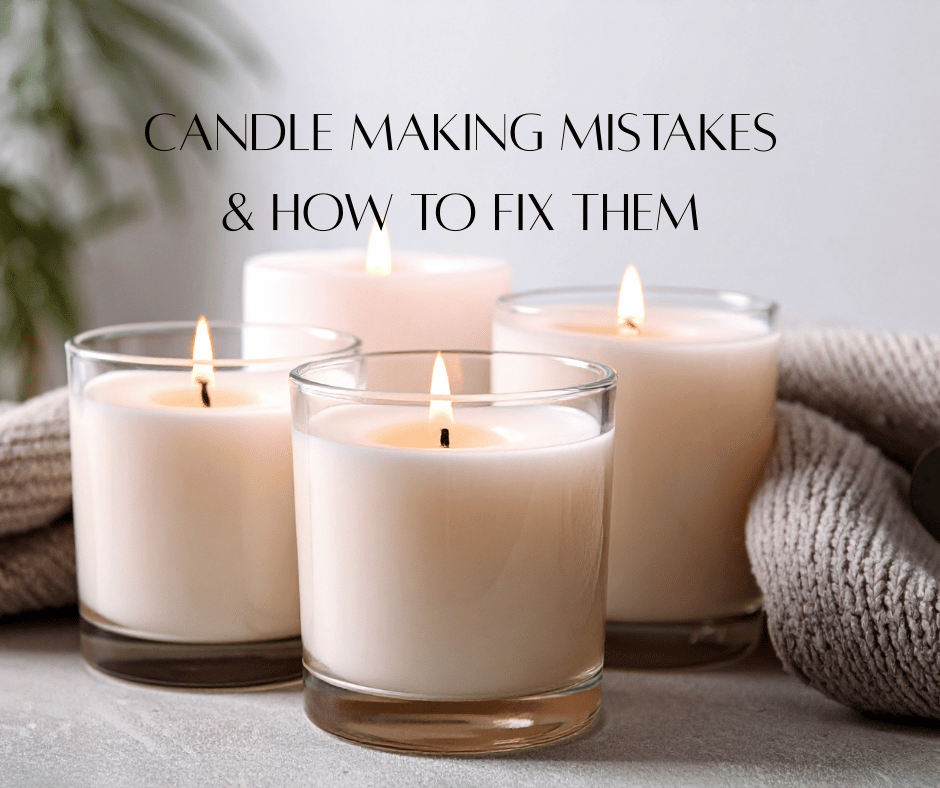
Candle making is equal parts art and science. Whether you’re just starting out or producing at scale, small mistakes can lead to big frustrations such as rough surfaces, tunnelling, sooting or poor scent throw.
The good news? Most candle issues are easy to fix once you know what’s causing them.
Here are some of the most common candle making mistakes we see, and exactly how to avoid them.

1. Rough, Bumpy or Fractured Candle Surfaces
Is your candle surface rough, uneven, bumpy or showing wax fractures once it cools?
This is usually caused by pouring your wax too hot.
When wax is overheated or poured above its recommended temperature, it can cool too quickly or unevenly, leading to surface imperfections.
✔ How to avoid it
Always follow the recommended temperatures for:
-
Heating your wax
-
Adding fragrance
-
Pouring your candle
We have our guidelines available here as a download, they are the key to achieving a smooth, professional finish every time.

2. Large Flame or Excessive Soot
A candle with a flame that’s too large or producing black soot is a clear sign something isn’t right. This usually comes down to one of two things:
-
Your wick is too large
-
Your fragrance load is too high
✔ Wick Size Tip
Wick size should always be chosen based on the internal diameter of your jar, not the height or style.
-
Measure the inside diameter of your vessel
-
Choose a wick that aligns with that measurement
If you’re using PCS glassware, we’ve done the hard work for you — wick recommendations are provided based on jar size. View them here
✔ Fragrance Load Tip
Correct fragrance loading is essential for:
-
Safe burning
-
Clean flame
-
Strong but balanced scent throw
For PCS wax blends and fragrance oils, we recommend:
-
8% fragrance load for best performance
-
Up to 10% maximum if required
How to calculate fragrance load
Take the total wax weight (in grams) for your jar and multiply by:
-
0.06 for 6%
-
0.08 for 8%
-
0.10 for 10%
This ensures consistency, safety and repeatable results.

3. Fragrance Beads or Pooling on Top of the Candle
If you notice fragrance residue, pooling or beads appearing on the surface of your candle after curing, it means the fragrance oil hasn’t properly bonded with the wax.
✔ How to avoid it
-
Add fragrance at the recommended temperature
-
Stir continuously for at least 2 minutes
This helps the fragrance bind correctly with the wax, preventing separation and ensuring even scent distribution.

4. Tunnelling
Tunnelling happens when the candle burns straight down the centre, leaving unmelted wax around the edges. The most common cause?
👉 The wick is too small for the jar.
✔ How to avoid it
-
Measure the internal diameter of your vessel
-
Match it to the burn diameter of the wick
Example:
If your jar is 72mm in diameter, a PT70 wick (burns up to 75mm) is recommended.
For vessels over 85mm in diameter, we recommend double wicking to achieve a clean, even melt pool and consistent burn.
Final Tip: Candle Making Is About Precision
Most candle issues come down to temperature control, accurate measurements and correct wick selection. Taking the time to test properly and follow supplier guidelines will save you time, money and frustration — and lead to better-performing candles your customers will love.
If you ever need help with:
-
Wick selection
-
Wax recommendations
-
Fragrance loading
-
Scaling your production
Our team is always here to help. When you grow, we grow. 🕯️✨



Leave a comment
All comments are moderated before being published.
This site is protected by hCaptcha and the hCaptcha Privacy Policy and Terms of Service apply.